.png)
The Next Chapter of Benefits Information
When people need an answer, they search. That has always been true, whether the question is simple or high-stakes.
What is changing is the expectation of what happens next.
For years, “search” meant scanning links and clicking through pages to piece together an answer. Today, more people want the answer delivered directly, in plain language, with context. This shift is already reshaping how consumers find information across industries, and it is especially relevant for health and benefits questions.¹
Search is becoming answer-first
AI-powered search is accelerating a move from “results” to “responses.” Instead of returning a list of webpages, many tools now summarize information and provide a conversational answer upfront. In other words, the experience is becoming more like asking a person than browsing a directory.²
This matters because expectations are not limited to online shopping or product research. The habit is carrying over into everyday life. When someone is confused, stressed, or short on time, they want the fastest path to clarity. Benefits questions fit that description perfectly.
People are adopting AI as a normal way to find information
This change is not theoretical. AI tools are already becoming a routine part of how people look for answers.
Menlo Ventures reports that 61% of American adults have used AI in the past six months, and nearly one in five rely on it every day.³ That is not experimentation. That is habit formation.
McKinsey reports a similar behavior shift inside search itself. 44% of AI-powered search users say it is their primary and preferred source of insight, ahead of traditional search engines at 31%.¹ This is a meaningful signal that the front door to information is changing, and many users are choosing conversation over navigation.
Health and benefits questions are already part of the shift
One of the clearest examples of this trend is health.
Fierce Healthcare reports that 3 in 5 adults in the U.S. say they have used AI tools for their health or healthcare in the past three months, citing OpenAI survey data.⁴ The same report notes that health insurance topics show up frequently in consumer AI usage, including plan comparisons, claims and billing, eligibility, and coverage questions.⁴
That overlap matters because benefits questions often sit at the intersection of health, money, and life decisions. They show up when someone is trying to take action, like choosing a provider, understanding a deductible, submitting a claim, or adding a dependent. In those moments, employees and families are not looking for a document library. They are looking for a clear answer they can trust.
The gap: how people search vs. how benefits information is delivered
Even as behavior evolves, benefits information is still often delivered in formats designed for storage, not understanding.
Many organizations rely on a mix of portals, PDFs, carrier links, and scattered resources. Employees may have access, but access is not the same as clarity. If finding an answer requires logging in, clicking through multiple systems, or interpreting dense language, many people will do what they already do elsewhere. They will search in a more conversational way.
This gap creates friction for everyone involved.
- Employees spend more time trying to find and interpret information
- HR teams get pulled into repeated questions, especially during high-volume periods
- Dependents, retirees, and candidates often have even fewer clear pathways to answers
The result is a benefits experience that can feel harder than it needs to be.
What this means for benefits communication going forward
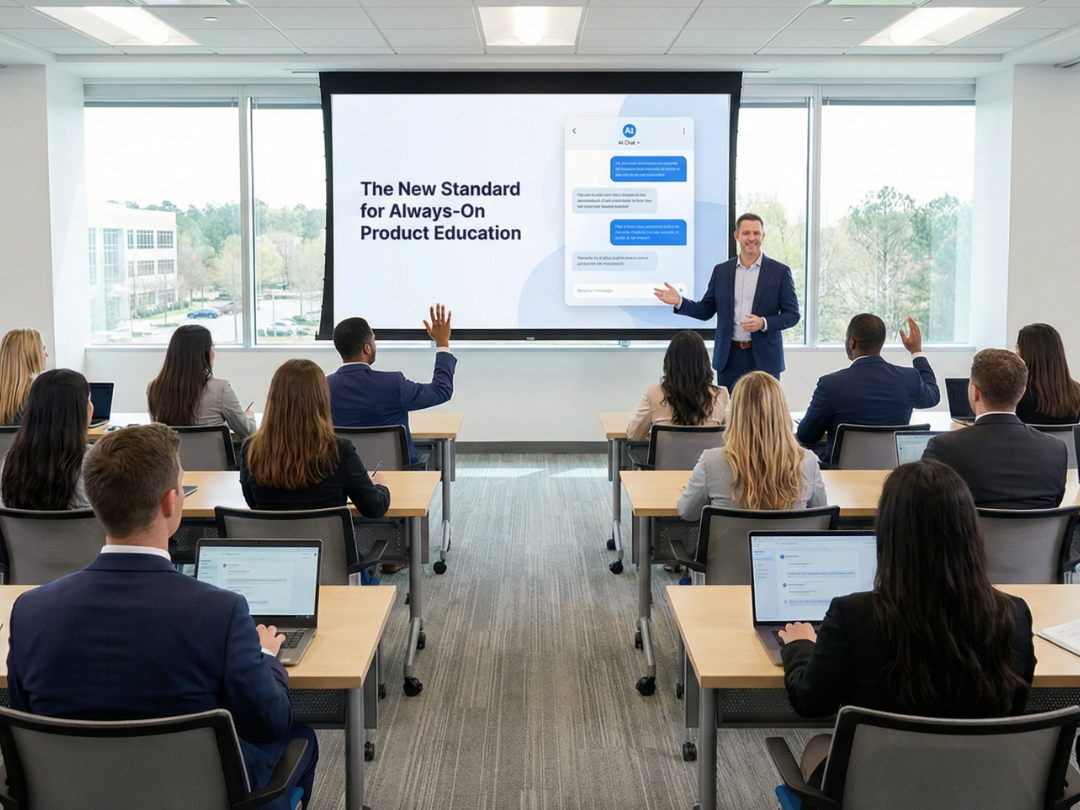
As AI-powered search becomes a standard way people seek information, benefits communication will need to adapt to a new baseline expectation.
People increasingly want benefits information that is:
- easy to access
- simple to understand
- available in the moment a question appears
- delivered in a conversational way that reduces guesswork
This is the same idea driving answer-first search. Content that is structured for clarity is more likely to be used, remembered, and acted on.²
Looking ahead
The best benefits communication has always met people where they are. Today, “where they are” increasingly includes conversational search and AI-driven answers.¹
How people look for answers is changing, and expectations around benefits information are changing with it. At SwellSpace, our team is actively working on new ways to support employees, dependents, retirees, and candidates as this shift continues. We believe benefits communication should feel as intuitive as asking a question and getting a clear answer, and we are excited about what comes next.
Sources
- New front door to the internet: Winning in the age of AI search, McKinsey (Oct 16, 2025)
- Answer Engine Optimization (AEO): From Clicks to Answers, Medium (Oct 25, 2025)
- 2025: The State of Consumer AI, Menlo Ventures (Jun 26, 2025)
- 40M people use ChatGPT to get answers to healthcare questions, OpenAI says, Fierce Healthcare (Jan 5, 2026)